30+ years in the industry
 Manufactured by us
 100% Natural Wood
 Next Day Delivery Available
Article, March 11, 2026
Click Lock vs Tongue and Groove: Best Options Compared
Choosing between click lock and tongue and groove engineered wood flooring is one of the most important decisions when investing in real wood floors. Both systems offer the natural beauty and character of genuine timber, but the way the boards connect has a significant impact on installation, durability and long-term performance.
While click systems are often marketed for their quick installation, tongue-and-groove engineered flooring remains the traditional and widely trusted solution used by flooring professionals. Understanding the differences between these systems will help homeowners, designers and specifiers choose the best engineered wood flooring for their project.
Understanding engineered wood flooring systems
Engineered wood flooring is constructed from multiple layers bonded together, typically with a strong plywood or hardwood core and a real hardwood wear layer on the surface. This structure provides greater stability than solid wood flooring while maintaining the authentic appearance and texture of natural timber.
Both click-lock flooring and tongue-and-groove flooring fall under the category of engineered hardwood flooring, but the joining system determines how the floor is installed, how it performs over time and how solid it feels underfoot.
What is click-lock engineered wood flooring?
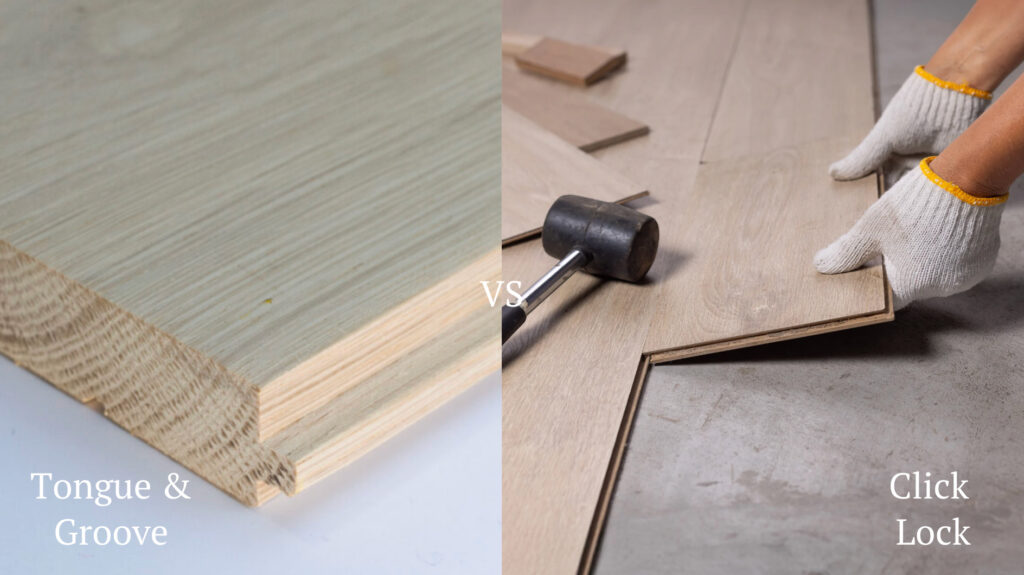
Click-lock engineered wood flooring uses a mechanical locking system that allows boards to click together without glue or nails. The boards sit over the subfloor as a floating floor, usually installed over an underlay.
Because of its simplified installation method, click flooring is often chosen for quick renovations or DIY projects. The floating installation allows the floor to expand and contract naturally, but it also means the floor is not permanently fixed to the subfloor.
While convenient, floating floors can sometimes feel less solid underfoot and may be more susceptible to movement or noise over time if not installed perfectly.
What is tongue and groove engineered wood flooring?
Tongue and groove flooring is the traditional method used in professional wood floor installations. Each board features a protruding tongue on one side and a matching groove on the other, allowing planks to fit tightly together.
The boards are typically glued, secret-nailed or fully bonded to the subfloor. This installation method creates a more stable and secure floor structure, which is why tongue and groove systems are widely used in high-quality residential installations, commercial spaces and premium flooring projects.
Because the boards are fixed rather than floating, tongue and groove engineered flooring tends to feel more solid, quieter and more durable over time.
Click lock vs tongue and groove: key differences
The most significant difference between click lock and tongue and groove flooring lies in the installation method and long-term structural stability.
Click systems prioritise speed and ease of installation, while tongue and groove flooring focuses on long-term performance and a more traditional, professional finish.
| Feature | Click Lock Flooring | Tongue & Groove Flooring |
| Installation method | Floating floor | Glued or nailed |
| Installation speed | Faster | Slower but more secure |
| DIY suitability | DIY friendly | Usually installed by professionals |
| Stability | Moderate | High |
| Underfoot feel | Can feel slightly hollow | Solid and secure |
| Long-term durability | Good | Excellent |
Because of its fixed installation, tongue and groove engineered flooring is often preferred for larger rooms, premium interiors and projects where long-term performance is a priority.
Underfloor heating compatibility
Both installation systems can be used with underfloor heating when the correct products and installation methods are used.
However, many flooring specialists favour tongue and groove engineered flooring for underfloor heating installations because the boards can be fully bonded to the subfloor. This improves heat transfer and helps create a more stable flooring surface.
Floating click systems can also work with underfloor heating but rely heavily on the quality of the underlay and installation.
Materials and styles available
Oak engineered flooring remains the most popular option across both click and tongue-and-groove systems. Oak offers excellent durability, natural character and a timeless appearance that suits both modern and traditional interiors.
High-quality engineered flooring typically features a thicker hardwood wear layer, allowing the floor to be sanded and refinished multiple times throughout its lifespan. This significantly extends the life of the floor and makes engineered oak flooring a long-term investment.
Many premium engineered floors are produced using the tongue and groove system because it allows for wider boards, longer planks and more traditional installation techniques.
Durability and long-term performance
Both click-lock engineered flooring and tongue and groove flooring benefit from the structural stability of engineered construction. The layered core helps the floor adapt to changes in humidity and temperature, reducing the risk of warping or movement compared to solid hardwood flooring.
However, floors installed using the tongue and groove method often deliver greater long-term stability because the boards are fixed directly to the subfloor. This helps minimise movement, reduces the chance of gaps appearing over time and creates a stronger overall floor structure.
For this reason, many flooring professionals consider tongue and groove engineered flooring the preferred choice for high-quality, long-lasting installations.
Choosing the right engineered flooring system
Click-lock engineered flooring can be suitable for quick renovations, temporary installations or projects where installation speed is the main priority.
However, for homeowners seeking a premium finish, long-term durability and a more solid feel underfoot, tongue and groove engineered wood flooring is often the preferred option. Its traditional installation method provides a more secure floor structure and is widely trusted by professional installers.
Final thoughts
Both click lock and tongue and groove engineered wood flooring offer the natural beauty of real timber floors, but the installation system plays a key role in how the floor performs over time.
Click systems offer convenience and faster installation, while tongue and groove flooring provides greater stability, a more solid feel and a professional finish that many homeowners and installers prefer.
At Natural Wood Floor, our range of engineered wood flooring focuses on premium quality materials designed for lasting performance and timeless style. Explore our collection to find the ideal flooring solution for your next project.