Article, May 15, 2026
How to Clean Hardwood Floors Safely and Effectively
Knowing how to clean hardwood floors safely and effectively is essential if you want to preserve their finish, prevent scratches and maintain their natural beauty over time. Hardwood floors are durable, but they still require the right cleaning routine, especially in busy homes where foot traffic, pet hair, loose debris and everyday dirt can quickly build up across the surface.
Whether you are caring for engineered boards, solid wood floors, oiled wood floors or varnished wooden floors, the safest way to clean hardwood is always the same in principle: use gentle tools, avoid excess moisture and match your cleaning solution to the floor type. Choosing high-quality materials from a specialist in wood flooring also makes long-term maintenance far easier, as better finishes are designed to cope with daily wear.
Understand your floor type before you clean.
Before you deep-clean wooden floors, you need to know what kind of finish you are dealing with. Oiled floors, lacquered surfaces and solid wood flooring all respond differently to moisture, cleaning products and regular maintenance. A floor with an oil-based treatment usually requires a softer, more controlled cleaning process, while sealed surfaces are generally more resistant to minor spills and routine wiping.
If your home features engineered wood flooring, the construction will usually offer better stability in rooms where moisture and temperature vary slightly. If you have solid wood flooring, extra care is needed because solid timber can be more sensitive to excess moisture and standing water.
Build a regular cleaning routine.
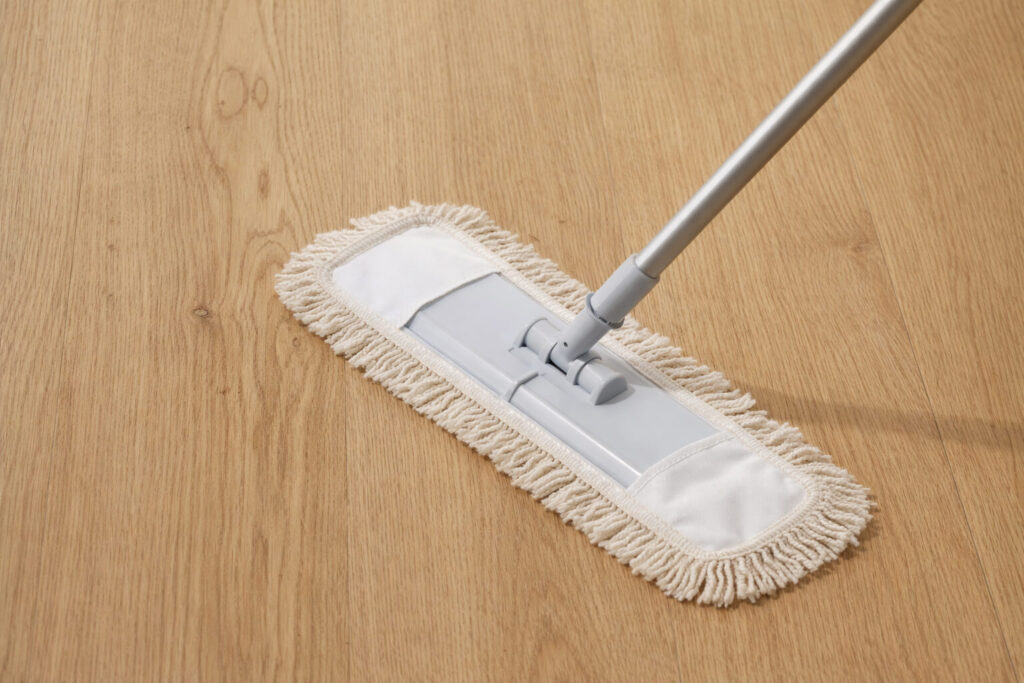
The most effective cleaning routine starts with regular cleaning rather than occasional heavy treatment. Daily dusting with a dry mop, dry cloth or microfibre mop helps remove dust, loose debris and pet hair before they scratch the floor. Hardwood floors require consistency more than intensity, and regular vacuuming is one of the best ways to keep grime build-up under control.
A vacuum with a hard head attachment is ideal for removing dirt from edges, corners and along skirting without damaging the floorboards. In high-traffic areas, a consistent routine will do more to preserve the finish than any deep clean. This is especially important in homes with furniture that is frequently moved or in spaces where family members spend a lot of time walking across the same surface.
Use a damp mop, never a soaking wet one.
When a floor needs more than dry cleaning, a damp mop is usually the safest option. The mop should be only lightly damp, never soaking wet, and the drying process should begin almost immediately after cleaning. Excess liquid is one of the main causes of damage to wooden floors, especially where moisture seeps into joints, edges or worn areas of finish.
Warm water with a few drops of an appropriate cleaning solution is usually enough to clean hardwood floors effectively. A spray mop can also work well because it helps control how much liquid reaches the floor. The key is to avoid standing water, prevent streaks and never let the area remain wet for longer than necessary.
If you are unsure about product suitability, the advice section at Natural Wood Floor Company offers practical guidance on caring for different types of real wood flooring and maintaining a high-quality finish.
Avoid steam cleaners and harsh chemicals.
Steam cleaners are often marketed as a convenient way to deep clean wood floors, but they are not the right choice for hardwood. The combination of heat and moisture can force water into the timber or beneath the finish, which may cause movement, surface dulling or long-term damage. Harsh chemicals, abrasive formulas and strongly perfumed products can be equally problematic, particularly on oiled floors and older varnished wooden floors.
The safest cleaning products are usually pH-neutral and designed specifically for hardwood flooring. A soft cloth, a microfibre mop and a gentle touch will always outperform aggressive methods when the goal is to clean wood floors safely and effectively.
How to remove stubborn stains safely
Stubborn stains and stubborn spots should never be attacked with excessive scrubbing. Instead, apply a small amount of suitable cleaning solution to a soft cloth or damp cloth and work on the affected area carefully. The aim is to lift the stain without wearing down the finish or introducing too much moisture.
For scuffs caused by furniture or shoes, a fuzzy tennis ball can sometimes help buff the mark away without harming the finish. Felt pads on chair and table legs are also a simple way to prevent scratches before they happen.
Keep long-term maintenance simple.
Long-term care does not need to be complicated. Vacuum regularly, remove dust before it builds up, use a dry mop between more thorough cleans and avoid excess moisture at every stage. In rooms with heavy foot traffic, a more frequent cleaning routine will help preserve the finish and reduce buildup. In lower-use spaces, gentle but regular upkeep is usually enough.
A clean hardwood floor should never feel sticky, streaky or overly wet. It should feel smooth, dry and well protected. Floors that are properly maintained not only look better but also last longer and retain more of their original warmth and character.
For broader care inspiration and practical aftercare ideas, our article on wood floor cleaner is a strong supporting resource for homeowners looking to refine their cleaning approach.
Conclusion
Learning how to clean hardwood floors safely and effectively comes down to a few reliable principles: remove dust regularly, use the right tools, avoid harsh cleaners and keep moisture under control. With the correct cleaning routine, even busy wood floors can retain their appearance, durability and natural appeal for many years.
For expert advice, premium products and trusted guidance on maintaining hardwood, engineered and solid timber surfaces, explore Natural Wood Floor Company.