Article, February 3, 2026
Sanding Engineered Wood Flooring: What’s Possible and What Isn’t
Engineered wood floors are built for stability and long-term performance, but many homeowners still wonder whether they can be sanded in the same way as solid wood flooring. The short answer is yes, sometimes. The longer answer depends on the wear layer, the sanding process you choose, and how much wood is actually available above the plywood core. Sand engineered wood flooring in the wrong way, or on the wrong product, and you risk exposing the veneer or damaging the multiple layers that give an engineered floor its strength.
At The Natural Wood Floor Company, we regularly advise customers on refinishing engineered hardwood floors and on when sanding is suitable, safe, and worth doing. This guide sets out what is possible, what isn’t, and how to approach sanding engineered wood with careful consideration.
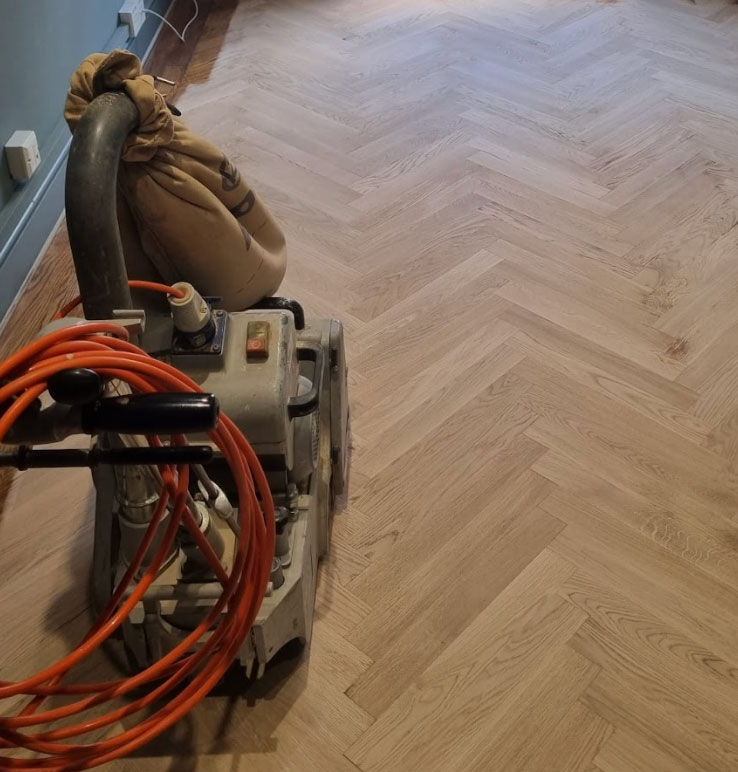
How engineered wood floors are constructed
An engineered floor is made of a top layer of real wood, often called the wear layer or wood layer, bonded to a stable core of plywood or similar material laid in multiple layers. That construction creates the timeless beauty of natural wood with better resistance to movement than solid wood floors.
The key point for sanding is that only the top layer is sandable. Once you sand through that wear layer, you reach the plywood core, and the floor cannot be repaired cosmetically.
The wear layer is the deciding factor.
Whether you can refinish engineered hardwood comes down to thickness. Many engineered hardwood floors have a wear layer anywhere from about 2mm to 6mm, but budget products can be thinner.
As a rough guide, a 3mm wear layer or thicker can usually handle sanding and refinishing at least once, sometimes twice over the floor’s life, assuming it has not been sanded before. Wear layers closer to 2mm may only tolerate one light sanding, and anything under 2mm should not be sanded because the risk of breaking through the veneer is too high. Thicker wear layers, such as 4mm to 6mm, can allow additional refinishing cycles, provided the sanding is done professionally and conservatively.
If you are unsure of your floor’s wear layer, check the product specification or ask your supplier. It is always safer to confirm before any sander touches the boards.
What sanding engineered wood flooring can achieve
When the wear layer is sufficient, sanding engineered wood floors can give them a new lease of life. Light sanding can remove surface scratches, dull patches, and ingrained dirt, then allow a fresh finish to be applied. This works especially well on lacquered floors that have become worn but are not deeply damaged.
Full sanding of the entire floor can also be suitable if the surface has heavy scuffs or you want to change the finish option, such as moving from a high sheen lacquer to a matte lacquer or oil for a more natural look. Done correctly, sanding and refinishing restores smoothness, refreshes the wood grain, and extends the longevity of engineered wood without needing a full replacement.
What cannot sanding fix?
Sanding engineered wood has limits, even on high-quality products. If the wear layer is thin, previously sanded, or already close to its minimum, deeper sanding will not be possible.
Sanding also cannot solve structural problems. If boards are lifting, delaminating, or moving due to subfloor issues or moisture, sanding will not address the cause. Likewise, deep dents into the veneer, damage from harsh chemicals, or staining that has penetrated through the top layer may not be fully removable without risking the veneer.
If a floor has been water-damaged and the plywood has swollen, sanding the surface will not restore stability. In those cases, replacement of affected planks or the whole floor is usually the right route.
The sanding process and why the technique matters
Because engineered hardwood has a finite wear layer, the sanding process must remove as little material as possible to achieve the desired finish. A heavy drum sander in inexperienced hands can take too much wood too quickly, especially near the edges and bevels.
Professional sanding usually starts with a coarser grit to level the surface, then moves through finer grits to refine the scratch pattern and prepare for finishing. Fine-grit sandpaper is essential for the final passes to achieve a high-quality finish without leaving swirl marks. Corners, edges, and areas near skirting boards are typically handled with an edge sander and a sanding block or detail tool, because floor sanders cannot reach these areas cleanly.
Light sanding with an orbital sander can be a good option when you are only refreshing the protective layer rather than reshaping the wood. For engineered floors with a borderline wear layer, this approach can be safer than a full drum sanding.
DIY or professional sanding
Some homeowners consider sanding engineered wood themselves, especially in one room or one corner where wear is localised. DIY can work for very light sanding and recoating, but it demands care, the right sander, and a realistic view of risk. A small error can cut through the veneer, and once that happens, the damage is permanent.
Professional sanding is strongly recommended for whole-house refinishing, thick wear-layer floors, or any surface where you want a uniform, factory-level finish. Professionals also manage dust extraction and finishing systems more effectively, which makes a visible difference to the result and the speed of return to use.
How to check suitability before sanding
If you do not know your wear layer thickness, start by checking the product information. If that is not available, a professional can sometimes assess the wear layer at a doorway or other inconspicuous area where the edge of the top layer is visible.
It is also worth considering how many times the floor has been sanded previously. Even a thick wear layer becomes thinner after each refinishing. If you are the second owner of the home and the floor looks previously refinished, assume less sanding capacity unless proven otherwise.
Getting the best outcome after sanding
After sanding, engineered wood needs a new coat to seal and protect the surface. Lacquer, oil, and stain finishes all have different impacts on appearance, maintenance, and durability. A good finish restores the protective layer and helps the floor resist new scratches from furniture legs and daily traffic.
Allow the finish to cure fully before heavy use, and continue with proper care such as felt pads under furniture, grit control at entrances, and avoiding standing water. This protects the renewed surface and maximises life between future sandings.
Final thoughts
Sanding engineered wood flooring is often possible, but it is never automatic. The wear layer thickness decides what you can safely do, and the sanding process must be carried out with precision to avoid damaging the veneer or exposing the plywood core. With thicker wear layers, careful professional sanding can restore engineered hardwood floors beautifully and add years to their life. With thin layers, light sanding or recoating may be the only safe option, and sometimes replacement is the smarter path.
If you are considering sanding engineered wood floors and want a clear view of what is possible for your specific product, The Natural Wood Floor Company can help.