30+ years in the industry
 Manufactured by us
 100% Natural Wood
 Next Day Delivery Available
Article, December 4, 2025
Wood Floor Cleaner: How to Maintain and Protect Your Natural Flooring
Natural wood flooring remains one of the most desirable choices for homes and commercial spaces, offering warmth, elegance and timeless character. To keep wood floors looking their best, proper care and regular cleaning are essential. Whether you have solid hardwood, engineered wood flooring or parquet floors, the right approach will help preserve the surface and prevent long-term wear and tear.
Using an appropriate wood floor cleaner plays a key role in maintaining and protecting your natural flooring. Incorrect cleaning products, harsh chemicals or excessive moisture can cause floor damage, dull the finish or disrupt the wood grain. Understanding the correct methods ensures your wood floor continues to look beautiful throughout its lifespan.
Understanding Different Types of Wooden Floors
Before choosing the right wood floor cleaner, it is important to understand the type of wooden floor you have. Solid hardwood floors are made from a single piece of natural wood, offering exceptional longevity and the ability to be sanded and refinished multiple times. Engineered wooden floors combine a natural wood top layer with a stable, high-density fibreboard or plywood core, giving them added strength while still showcasing real wood.
Laminate flooring is different because it is not made from natural wood, so it requires alternative cleaning solutions. Wooden floors finished with lacquer or oil also require specific cleaning products to protect the surface. Lacquered wooden floors have a sealed, protective top coat, while oiled wooden floors absorb maintenance oil into the wood surface for a natural, breathable finish. Knowing whether you have an oiled floor, a lacquered surface or solid hardwood helps determine the right maintenance products.
Choosing the Right Wood Floor Cleaner
Wood floor cleaners are specially designed to clean wooden floors without damaging the wood or leaving residue. A pH-neutral cleaner is ideal because it protects the top layer while effectively removing dirt and grime. Using standard household cleaners, washing-up liquid or soapy water can dull the wood surface and may cause sticky build-up that traps dirt.
When cleaning wood floors, always choose a cleaning product designed specifically for the type of finish you have. A cleaner formulated for lacquered floors is different from one suited for oiled wooden floors. Using the wrong cleaning product may cause long-term wear, cloudiness or uneven patches across the floor.
The Step-by-Step Process for Regular Cleaning
Regular cleaning starts with removing loose dirt and debris. A vacuum cleaner with a soft brush attachment is ideal for wooden flooring because it lifts dust without scratching the surface. If you prefer, a dry mop or dust mop can also be used to remove loose dirt.
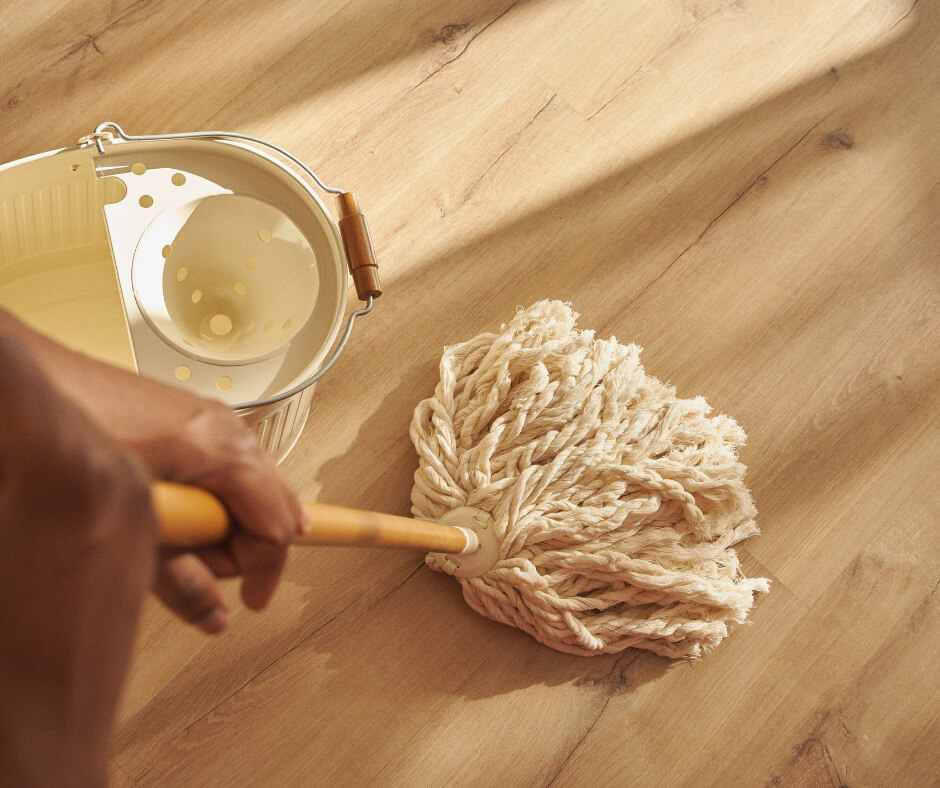
Once the floor is free from debris, you can clean it with a slightly damp microfibre mop or spray mop. A damp mop helps remove surface marks while avoiding excess moisture. Always ensure the mop is only lightly damp, as excess water can seep into the wood, damaging the top layer and causing staining or warping. Avoid traditional wet mops, as too much water can lead to permanent floor damage.
Deep Cleaning Wood Floors
Deep cleaning may be needed monthly or seasonally, depending on the level of use. For deeper cleaning, mix a specifically designed wood floor cleaner with warm water and apply it using a spray mop or a lightly damp mop. This helps lift stubborn dirt while protecting the wood.
Avoid using too much water, steam cleaners or aggressive scrubbing tools, as they can damage the wood’s surface. For stubborn stains or dirt and grime that has built up over time, gently rub the area with a soft cloth or absorbent cloth using a small amount of cleaner. Avoid harsh chemicals or abrasive sponges that could scratch the wood grain.
Special Care for Oiled and Lacquered Wooden Floors
Oiled wooden floors require specific maintenance to keep them protected. Over time, the surface may dry out and require a fresh coat of maintenance oil. This restores the sheen, nourishes the wood and helps protect against daily wear.
Lacquered floors need a different approach. Because the lacquer forms a sealed top layer, they should be cleaned using gentle, pH-balanced cleaning products. Abrasive chemicals or aggressive scrubbing can damage the lacquer and leave the surface looking dull. Regular cleaning with a suitable wood floor cleaner keeps lacquered floors looking polished and even.
Preventative Maintenance: Protecting Against Scratches and Damage
Preventative care is as important as regular cleaning. Using felt pads or furniture pads under heavy furniture helps prevent scratching and scuff marks. Rugs in high-traffic areas protect against wear and trap dirt before it reaches the floor. The chance of moisture damage and discolouration is decreased when wet shoes are taken off before walking on wooden floors.
Spills should always be wiped up immediately with a soft cloth or paper towel, as prolonged exposure to liquids can damage the wood or seep into the grooves. Keeping pets’ nails trimmed, ensuring furniture legs are padded and reducing direct sunlight exposure also help protect wooden floors from premature ageing.
Mistakes to Avoid When Cleaning Wood Floors
Several common mistakes can cause unnecessary damage to wooden floors. Using too much moisture is one of the most frequent issues, as excess water can warp or stain the wood. Harsh chemicals can strip away protective layers or discolour the surface. Many people skip vacuuming before mopping, which causes dirt and grit to act like sandpaper across the floor’s surface.
Poor maintenance or ignoring regular cleaning routines allows dirt and debris to accumulate, which increases the risk of damage over time. Steam cleaners should always be avoided on natural wood flooring, as they introduce too much moisture and heat, potentially leading to significant surface damage.
When to Re-Oil or Refinish Your Wooden Floor
Oiled floors need periodic maintenance to stay protected. Re-oiling helps refresh the surface, restore colour and resist wear from daily use. Depending on foot traffic, such maintenance may be required annually or more frequently in busy living rooms or commercial entrances.
Solid hardwood and engineered wood flooring can also be sanded and refinished to restore their appearance. Refinishing removes deep scratches, restores the natural beauty of the wood and gives the floor a new surface. If you notice dull patches, deep scratches, or uneven sheen, your floor may benefit from professional refinishing rather than just routine cleaning.
Final Thoughts: Keeping Your Natural Wood Flooring Beautiful
Natural wood flooring offers exceptional beauty and character, but it requires proper care to preserve its appearance. Using the right wood floor cleaner, following the correct cleaning routine, and protecting the floor from moisture, scratches, and harsh chemicals will keep it looking its best for many years. With regular cleaning, periodic maintenance and the right tools, you can make sure your wood floors remain a standout feature in any space.
For premium maintenance products, natural wood flooring options and professional advice, visit The Natural Wood Flooring Company for high-quality solutions designed to protect and enhance your wood floors.
Disclaimer:
This guide provides general cleaning advice only. Always follow manufacturer recommendations for your specific flooring product, and consult a flooring professional before applying maintenance oils, sanding or refinishing.